
 Dutch
Dutch
 English
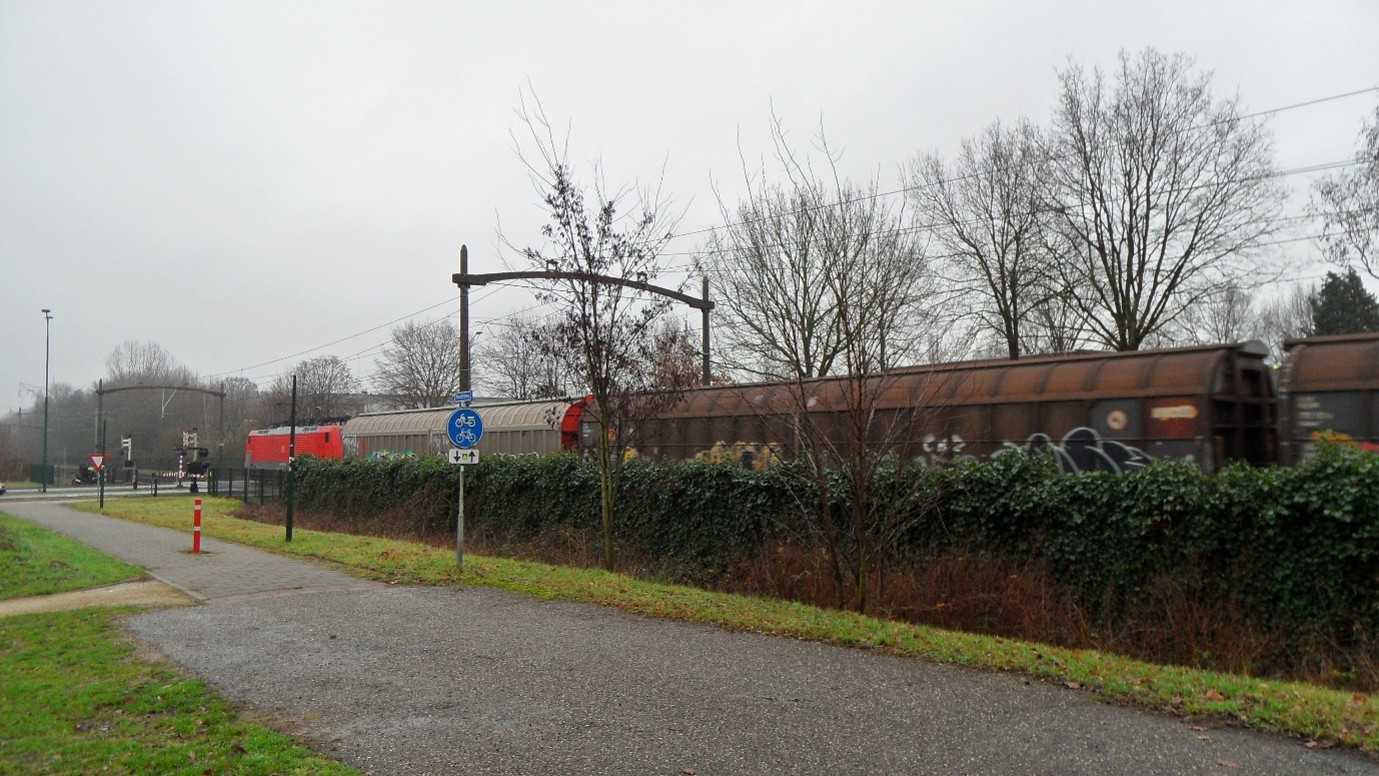
Predict railway-induced vibration for new buildings
In one of our recent projects, we combined vibration measurements, numerical modelling, and data-driven analysis to assess the potential impact of railway-induced vibrations on a planned residential building.
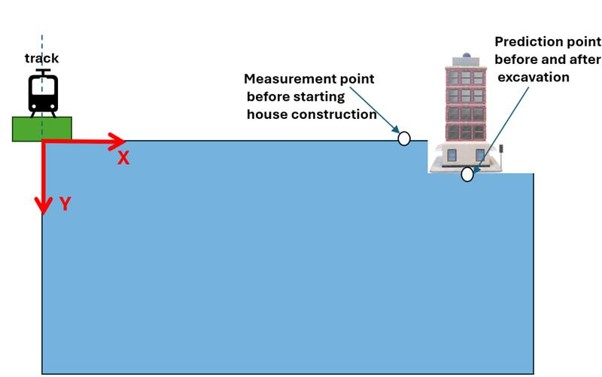
Our approach consisted of several steps:
- Vibration measurements at reference locations close to the railway.
- Subsurface data from DINOloket to construct a representative numerical model of the soil.
- Numerical simulations using STEM-Vibration with a moving broadband excitation for system identification. The resulting force-to-velocity transfer characteristics were combined with the measured vibration data to estimate a simplified equivalent moving train load capable of reproducing the observed ground vibration.
- The estimated train load was then used as input for the main STEM-Vibration simulations to predict vibration propagation from the railway towards the future building and to determine the vibration insertion loss between the measurement locations and the building foundation.
- Comparison of the existing situation with the future situation, including the planned excavation and construction geometry.
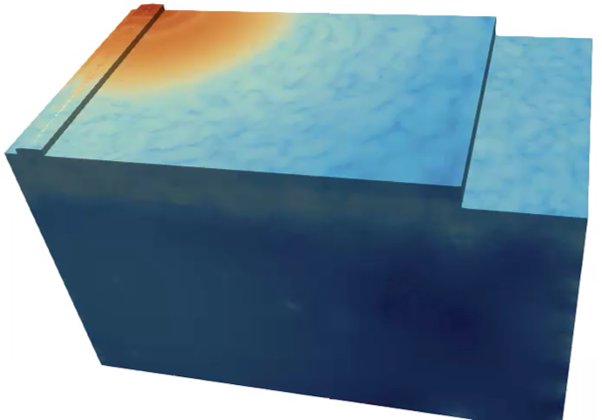
By combining the numerically predicted vibration transfer with measured train pass-by data, we were able to estimate the expected vibration levels at the future building and assess the probability of vibration nuisance associated with both passenger and freight trains.
What we particularly value in this type of project is the hybrid approach: a combination of physics-based modelling and measurement-driven calibration. Measurements provide insight into the behaviour of the existing system, while numerical modelling enables us to investigate a future situation that does not yet physically exist.
This hybrid approach provides a practical way to support design decisions in source or mitigation measures and assess vibration risks before construction begins.